In the past decade (pre-2017), noteworthy scientific discoveries have emerged across various branches of the natural sciences. These breakthroughs have provided fresh insights into our understanding of the world, prompting contemplation on the potential impact on our societal progress. As is customary, scientific advancements have the capacity to push the boundaries of our social sphere in various directions, reminiscent of the era of atomic science, which brought both positive and negative implications.
The utilization of these discoveries within our tangible reality hinges upon our adherence to ethical principles and our deep comprehension of our own nature. Consequently, it behooves us to allocate intellectual capital towards contemplating our sociopolitical trajectory in the face of emerging technologies. Hence, it is imperative that pertinent social scientific disciplines conscientiously address the challenges posed by such advancements. Firstly, this entails integrating these topics as foundational knowledge within educational curricula, fostering an environment where future scholars can generate well-reasoned hypotheses. Secondly, it necessitates the promotion of open discourse during active scientific research, expediting the dissemination of insights. Rectifying the current lag in this process is of paramount importance. Accordingly, universities must proactively incorporate these new frontiers within their academic programs.
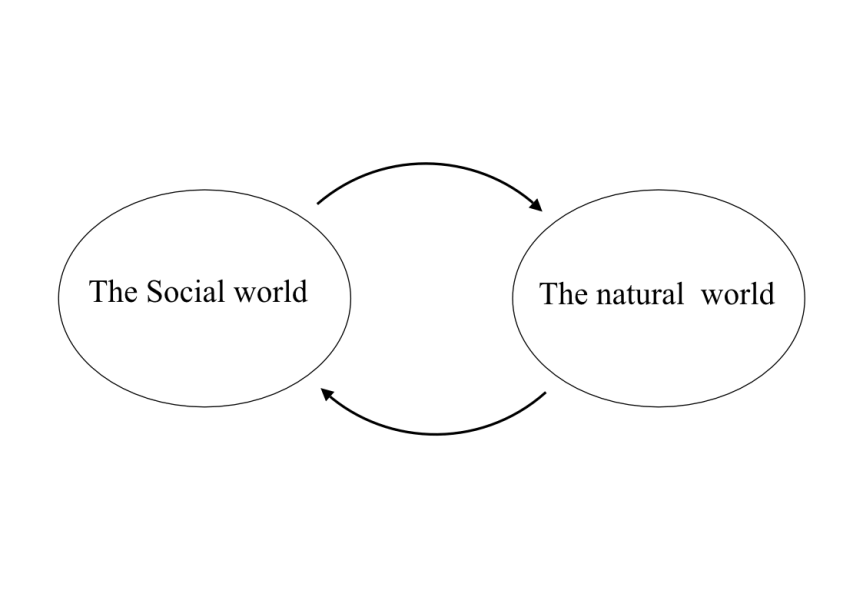
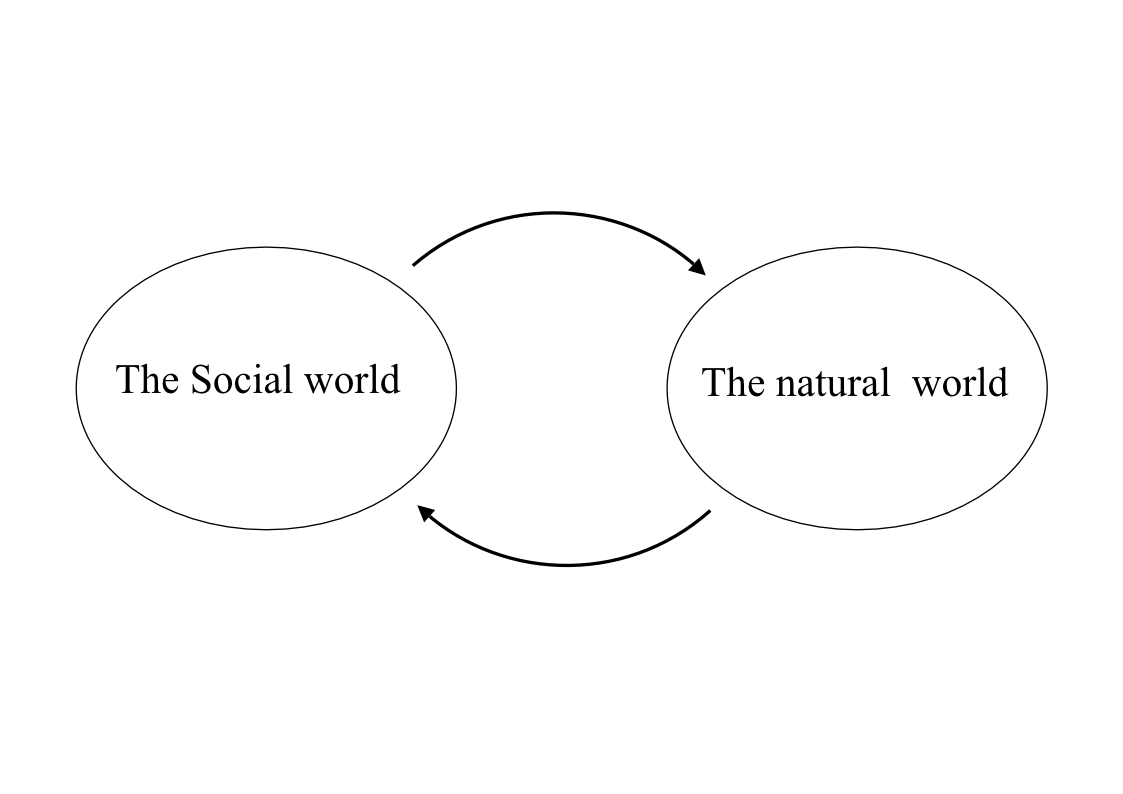
The reciprocal dissemination of knowledge between natural scientific fields is notably more effective, facilitated by the shared utilization of information for scientific progress. Nevertheless, a discernible dearth of this interplay exists between the natural sciences and social scholarly endeavors. For instance, it is commonplace for biologists, by virtue of their engagement with astrobiology, to possess familiarity with select new theories and concepts in the field of astrophysics. Conversely, as a jurisprudent, I regrettably acknowledge the absence of such information dissemination during the course of my studies. It is incumbent upon the social scholarly activities to recognize that the overall advancements in the natural sciences invariably impinge upon the very fabric of societies, thereby engendering the emergence of novel customs consequent to technological breakthroughs, ethical considerations, shifts in perspectives, and beyond. Adopting a philosophical vantage point, it becomes evident that the natural sciences proffer an extensive trove of material for pondering our collective social future, comprehending the potential societal transformations that may arise from nascent scientific paradigms and technological strides, and discerning authentic scientific tenets from their pseudoscientific counterparts.
Contemporary philosophical and social scholarly endeavors often fall short in effectively integrating new discoveries into their analyses. Even speculative philosophical narratives frequently lack a profound engagement with emerging scientific realities or prospective future developments. Over the past three decades, there has been a prevailing inclination within social scholarly activities to primarily address consequences without delving deeply into underlying causes. Rather than examining causal factors and fearlessly exploring probable outcomes based on scientific advancements and informed ethical considerations, we find ourselves repetitively revisiting subjects from the past. This deficiency in robust scientific literacy constrains imaginative thinking regarding novel research themes within social scholarship. Another concern pertains to the imprecision prevalent in these activities, rendering prognostications erring more towards speculation or prophecy than scientifically grounded predictions. Consequently, discourse surrounding potential implications is often tempered, regrettably limiting comprehensive dialogue.
I want to clarify that my intention is not to suggest that social scholars are bereft of intellectual capacity or the ability to devise innovative solutions for societal issues. Rather, I am emphasizing the importance of possessing accurate and contemporary information across all domains, particularly within the natural sciences, as a foundation for effective problem-solving. It is imperative to maintain a strong connection with the principal facilitator of scientific progress, namely the natural sciences, as it greatly informs our creativity and ideation processes.
Allow me to provide an illustrative example. The advancements made in neuroscience have significantly impacted our comprehension of human psychology, subsequently influencing various social paradigms, such as the formation of social groups, indoctrination of ideologies, prevalence of superstitions, exertion of political influence and power dynamics, legal understanding of criminal responsibility, and more. Similarly, the field of evolutionary biology has reshaped our perception of human origins and played a pivotal role in debunking the fallacious notions of racism. Additionally, it has deepened our insights into the evolution of pathogens, among numerous other areas of study.
It is imperative to acknowledge that the entirety of our social theories and concepts are fundamentally intertwined with the implementation of the natural scientific framework. Unfortunately, this realization is frequently achieved with a significant temporal delay, resulting in a postponed integration of scientific progress into social dialogue and decision-making processes.
The inclusion of natural scientific curricula in social scholarly endeavors would greatly enhance overall scientific literacy. Primarily, this would provide an opportunity to cultivate the skill of formulating pertinent inquiries and making astute observations of our surroundings, guarding against susceptibility to pseudoscience and conspiratorial beliefs. Such foundational principles must not be overlooked or undermined. Additionally, as previously articulated, the reintroduction of natural sciences into social scholarly activities would bolster political comprehension concerning environmental predicaments. Given that policymakers often possess backgrounds in political science, sociology, or law, they wield a profound understanding of political systems and their potential for transformation. Nonetheless, it is disheartening to witness the manifestation of their inadequacy in comprehending the natural world.
Academics in the fields of philosophy, sociology, jurisprudence, political science, and related disciplines should endeavor to acquaint themselves extensively with the latest advancements in the natural sciences. By doing so, they will be better equipped to develop and implement contemporary and efficacious solutions to the myriad global and regional challenges that we face.
(1) E.g. “Does Poor Understanding of Physical World Predict Religious and Paranormal Beliefs?” published in Applied Cognitive Psychology Volume 30, Issue 5, pages 736–742, September/October 2016; http://onlinelibrary.wiley.com/wol1/doi/10.1002/acp.3248/full
 Scientifically Literate Junction